Staying Safer Through the Holidays: A Compassionate Harm-Reduction Guide
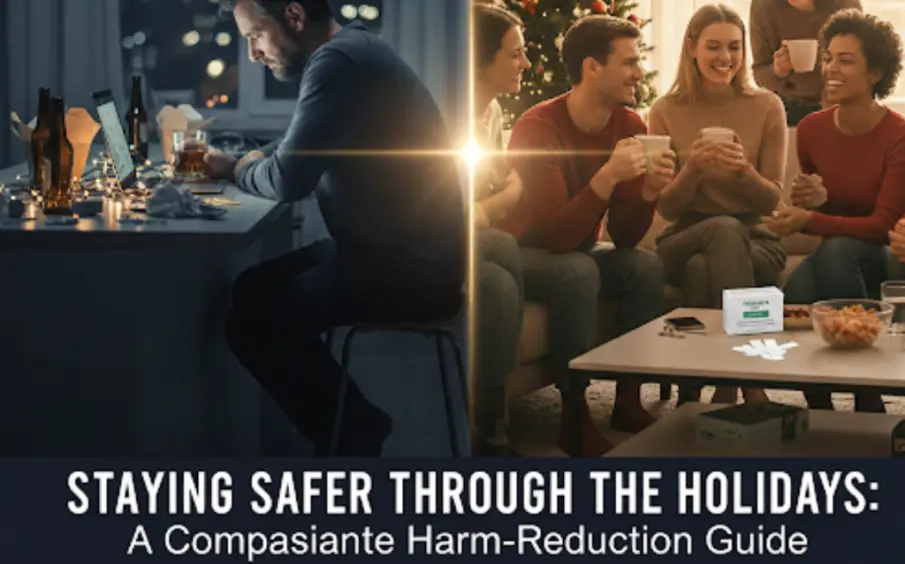
The holidays often come wrapped in expectations - joy, togetherness, celebration. But for many people, they also bring stress, grief, loneliness, financial pressure, and complicated family dynamics. When emotions run high, it’s common to reach for familiar ways to cope, including alcohol or drugs.
Harm reduction isn’t about telling anyone what they should do. It’s about recognizing reality and offering tools that reduce risk. Especially during the holidays, harm reduction can mean the difference between getting through a difficult season safely or facing consequences no one planned for.
This guide is about staying aware, prepared, and supported during emotionally intense times.
Why the Holidays Increase Risk
Several factors converge during the holiday season, making substance-related harm more likely:
- More social gatherings where substances are present
- Disrupted routines, sleep, and eating habits
- Emotional triggers such as grief, family conflict, or isolation
- Stronger or unfamiliar substances circulating
- Increased mixing of alcohol with other drugs
These risks don’t require heavy or daily use. Even occasional or social use can carry higher danger during this time of year.
What Harm Reduction Really Means
Harm reduction meets people where they are. It recognizes that substance use happens for many reasons - celebration, relief, connection, or escape and focuses on reducing harm rather than demanding abstinence.
During the holidays, harm reduction centers on:
- Awareness of what you’re using
- Preparation for emergencies
- Reducing isolation
- Making intentional choices instead of reactive ones
It’s not about doing everything perfectly. It’s about protecting yourself and the people around you.
Common Holiday Risks to Keep in Mind
Unpredictable Drug Supply
Many substances today are stronger or contaminated without the user knowing. Fentanyl has been found in stimulants, pressed pills, and other non-opioid drugs. Small differences in dose can have serious consequences.
Mixing Substances
Alcohol is often combined with other substances at holiday gatherings. Certain combinations significantly increase overdose risk:
- Alcohol + opioids or benzodiazepines
- Alcohol + cocaine
- MDMA + dehydration or overheating
Mixing often happens unintentionally, which is why awareness matters.
Reduced Tolerance
If you’ve taken a break from using, your tolerance may be lower than you expect. What once felt manageable can quickly become overwhelming.
Using Alone
Loneliness tends to increase during the holidays. Using substances alone raises overdose risk because no one is there to notice warning signs or respond.
Practical Harm-Reduction Tools That Save Lives
Naloxone
Naloxone reverses opioid overdoses and is safe, easy to use, and widely available. It won’t harm someone if opioids aren’t involved and won’t cause a high.
Basic steps include recognizing overdose signs, administering naloxone, calling emergency services, and staying with the person until help arrives.
Fentanyl Test Strips
Testing substances takes only a few minutes and can significantly reduce risk. While testing doesn’t guarantee safety, it helps identify hidden fentanyl exposure before use.
A Simple Holiday Safety Plan
Before parties, travel, or long nights, consider having:
- Naloxone
- Fentanyl test strips
- Water and electrolytes
- A charged phone or power bank
- A trusted person to check in with
- Emergency numbers saved
You may never need these but having them could save a life.
Everyday Harm-Reduction Tips
- Start low and wait before using more
- Eat before drinking or using substances
- Alternate alcohol with water
- Avoid using alone when possible
- Keep drinks with you in public settings
- Don’t drive while impaired
- Check on friends who seem unusually quiet or unwell
Looking out for each other is one of the most effective forms of harm reduction.
When More Support Is Needed
Sometimes harm reduction is only the first step. If substance use feels harder to control, or if the holidays trigger patterns you’re struggling to manage, professional care can provide stability and support. This may include structured services such as alcohol addiction treatment in Virginia for individuals who need additional guidance during high-risk periods.
For those considering drug addiction rehab in Virginia, integrated programs that address both substance use and emotional health can help people move beyond survival mode and toward lasting recovery.
Closing Thoughts
Harm reduction is an act of compassion, not permission or judgment. You deserve to get through the holidays safely, with your health and dignity intact. Whether you use substances occasionally, regularly, or not at all, staying informed and prepared is a powerful way to care for yourself.
If you or someone you care about needs immediate emotional support, confidential help is available 24/7 in the U.S. by calling, texting, or chatting 988.
You don’t have to navigate this season alone and safety can always be part of the celebration.
More to Read:






Previous Posts:

