Moving Past the Gym: How Americans Are Reclaiming Their Relationship with Exercise
Something has been happening in American fitness over the past decade that the industry's own metrics have not quite captured. Gym membership numbers are roughly flat. Equipment sales are uneven. And yet, by almost every measure, the population of people engaged in meaningful, regular physical activity has grown. The explanation is not complicated: people are increasingly finding ways to exercise that do not involve a membership card.
This is not a story about fitness apps or the work-from-home class boom, though both are real phenomena. It is a more fundamental shift in how ordinary people are thinking about their relationship with physical activity — and, as a result, what kinds of services, tools, and communities they are willing to invest in. The center of gravity in fitness is moving, and it is moving away from the big facility with the annual contract.
The traditional gym model asked a great deal of its members. Show up. Navigate a space designed for everyone and optimized for no one in particular. Figure out your own programming from a floor full of machines. And do all of this consistently enough over time to actually see results. Most people did not. The industry accepted this as a normal conversion rate, because the economics of gym membership do not require members to actually use the gym — just to keep paying for it.
What the Gym Model Gets Wrong
This is not entirely the gym's fault. The architecture of commercial fitness was built around a different era's assumptions about how people exercise, how much time they have, and what motivates them to keep going. Most of those assumptions have aged poorly.
What research on exercise adherence consistently shows is that people do not stick with physical activity because they have access to equipment. They stick with it because of community, accountability, relevance, and some form of visible progress. None of these are things a gym membership delivers reliably. A treadmill is not a community. A locker room is not accountability. Access to machines is not a program.
The gap between what the commercial gym delivers and what exercise adherence actually requires has grown wide enough that a new set of offerings has emerged to fill it. Some of these offerings are technology-driven. Others are structural — different business models, different physical configurations, different relationships between providers and clients. Together, they are reshaping who fitness is for and how it gets delivered.
When Children Move: The Long Game
One of the most overlooked dimensions of this shift is the growing recognition that fitness habits are established early — often far earlier than adulthood. The research is clear: children who build physical competence, confidence, and a positive relationship with movement before adolescence are substantially more likely to maintain physically active lives as adults. This is not new information, but it is finally translating into programming.
The traditional response to children's physical development has been to route it entirely through school PE and organized sports. Both systems have genuine value, but neither is sufficient on its own. Physical education has been systematically under-resourced in many districts, and organized sports require time, transportation, and financial investment that many families cannot sustain through their children's entire developmental window.
What has taken shape in the space those systems leave open is a category of purpose-built programs, and operators focused on kids fitness have developed them in a more deliberate and developmental way. Rather than treating children as miniature adults who simply need to run around more, the better programs work with actual child development frameworks — understanding how motor learning works at different ages, how to build fundamental movement patterns before layering on skill, and how to make physical activity feel like something a child chooses rather than something imposed on them.
The downstream effects of this investment are not immediately visible. But the long-term implications — for public health, for the fitness industry's own market, and for the individuals involved — are significant. A child who learns to love movement will likely be a lifelong participant in physical activity in one form or another.
The Case for Simplicity: Enter the Kettlebell
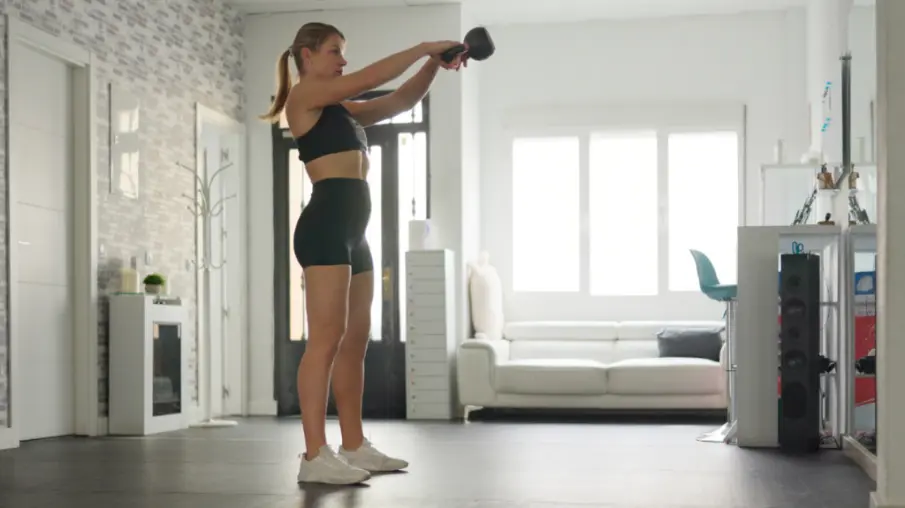
Among adults, the fitness landscape has fragmented in a particular direction that would have seemed counterintuitive twenty years ago: less equipment, more skill. Fewer machines, more movement competence. The kettlebell is perhaps the most legible symbol of this shift, and its resurgence says something interesting about where fitness culture is actually heading.
The growing community around kettlebell workouts occupies a specific and increasingly popular territory in the market. They require minimal equipment but genuine coaching to execute safely and effectively. They develop strength, power, and cardiovascular capacity simultaneously in a way that isolation machine training simply does not. And they translate — the hip-hinge pattern practiced in a kettlebell swing is the same biomechanical shape used to pick something up off the floor, lift a child, or brace against unexpected impact. That functional transfer matters to people who want their training to show up in their actual daily lives.
The growth of this culture has also attracted a notably serious practitioner community. Certifications, competition formats, and coaching standards have matured considerably over the past fifteen years. The result is a training modality that pairs accessible entry points with genuine depth — you can pick up a moderate weight and learn the basics relatively quickly, but mastery takes years and continues to reward investment.
It is also worth noting that the kettlebell's resurgence has not been driven by marketing budgets. It has been driven by results, by practitioner communities, and by word of mouth from people who discovered that an old tool, properly used, is still one of the best available.
Taking Fitness to the People
The conversation about fitness access usually gets framed as an economics problem, and the economics are real. But there is a spatial dimension to the access question that does not get enough attention. Commercial fitness infrastructure follows population density and disposable income. That means large areas of the country — rural communities, lower-income neighborhoods, suburbs that are not anchored by commercial development — are simply underserved by the conventional model.
The operators building around mobile fitness represent a structural solution to a structural problem. Rather than building a facility in a location and expecting clients to come to it, mobile operations bring professional-grade equipment and instruction directly into communities. The specific formats vary: converted trailers, scheduled pop-up setups, units parked on school grounds or community center lots. The underlying logic is the same — the service travels.
This matters most in places where no commercial gym option exists and where the economics of building one have not penciled out for a private operator. A community that has not previously had access to qualified fitness instruction is not just getting a new amenity. It is getting something qualitatively different: a resource that treats its members' physical health as worth investing in.
Why the Boutique Studio Model Works
For clients who want more than access, a dedicated personal training studio has carved out an increasingly stable place in the fitness landscape. The premise is straightforward: rather than scaling through volume — more members, more equipment, more floor space — a boutique studio scales through depth, offering a quality of coaching and individual attention that commercial gyms are structurally unable to match.
The tradeoffs are real. Boutique studios cost more and serve fewer people. The client who works with a coach in this environment is paying for something genuinely different: programming written for their body and their goals, a relationship that evolves over time, and an environment where the standards of attendance and effort are held consistently.
What the growth of this model reflects is a growing population of fitness consumers who have been through the commercial gym experience and found it insufficient. They have had memberships. They have had access to treadmills and locker rooms and group classes. What they have not had is someone who actually knows them. A boutique studio addresses that absence directly.
A Movement Beyond the Movement
The recalibration of American fitness culture is not happening in a single direction or at a single speed. It is happening across a distributed network of smaller changes — in how programs for children are structured, in what equipment adults choose to commit to, in how underserved communities gain access to professional instruction, and in what the most demanding clients are willing to pay for.
None of these changes is individually sufficient to transform the industry. But together, they represent a genuine shift in the center of gravity of what fitness means in practice. The old model — show up at a big facility, use the machines, go home — served a subset of the population reasonably well and mostly ignored everyone else.
What is replacing it is not a single alternative but a range of them, each suited to a different context and a different set of needs. That is more complex to describe, and harder to reduce to a single trend story. But it is more honest about what a diverse population actually requires from the physical activity landscape. Increasingly, the best operators in the fitness world understand that serving that diversity is not a compromise — it is the opportunity.
More to Read:








Previous Posts:

